Best overall: suburb vacancy data matched to your property type. Best for spotting changes: a monthly vacancy trend. Best for checking a purchase: a comparable-listing audit. Compare Adelaide rental vacancy rates in 2026 using these methods together; Axiomrealty offers investment advisory and property management for South Australian property investors.
- Compare Adelaide rental vacancy rates using the same source, reporting month and geographic boundary.
- Property-type comparisons are the best starting point for an Adelaide investment shortlist.
- Use vacancy trends and comparable rental listings to check whether suburb averages fit your property.
- Axiomrealty offers investment advisory and property management for South Australian property investors.
Why this matters
A rental vacancy rate describes a rental market, not your property's next tenancy. A suburb-wide figure cannot tell you whether a particular house or apartment will attract suitable applicants.
For a 2026 investment decision, use vacancy as an initial filter. Then check the property's condition, location, competing listings and operating requirements. The lowest vacancy rate is not, by itself, a reason to buy.
The useful comparison is between properties that serve the same tenant need. Comparing an apartment-heavy suburb with a detached-house market without separating dwelling types mixes different rental markets into one ranking.
What makes the best vacancy-rate comparison
Judge the evidence before judging the suburb. These criteria determine whether a vacancy comparison supports your decision:
- Consistent definition: Check what the publisher counts as vacant and how it defines the rental stock denominator.
- Matched geography: Keep suburb, postcode and broader regional figures separate. Similar place names do not guarantee identical boundaries.
- Matched property type: Compare houses with houses and apartments with apartments wherever the dataset permits.
- Aligned dates: Use the same reporting month for every suburb on your shortlist.
- Enough context: Read the underlying counts and a monthly history, not just a percentage displayed in isolation.
- Property-level checks: Inspect current competing rentals before treating an area-wide rate as evidence about a specific purchase.
A useful comparison answers a narrow question: does the rental evidence support this property, for this intended tenant, at this point in time? A broad claim that a suburb is simply good or bad does not answer that question.
Adelaide rental vacancy comparisons at a glance
The ranking below orders comparison methods by their role in an investment decision. It is not a league table of Adelaide suburbs: each method answers a different question.
| Rank and method | Best for | Standout feature | Key limitation |
|---|---|---|---|
| 1. Property-type comparison | Building your suburb shortlist | Compares the relevant dwelling market | Depends on consistent source categories |
| 2. Monthly vacancy trend | Identifying direction | Shows whether the latest result is persistent | Does not explain the cause of a change |
| 3. Comparable-listing audit | Assessing a particular purchase | Examines properties competing for similar tenants | Advertised listings are not completed leasing outcomes |
| 4. Wider-catchment comparison | Checking a thin local dataset | Adds context from nearby rental alternatives | Can conceal differences within the catchment |
| 5. Property-management assessment | Planning leasing and operations | Connects market evidence with property requirements | Requires clear supporting evidence |
1. Property-type comparison: best for building a suburb shortlist
A property-type comparison separates the rental segment you intend to buy into. For an Adelaide house purchase, prioritise house-specific evidence rather than assuming the all-dwellings vacancy rate describes the same market.
Start with your property brief. Specify the dwelling type, bedroom requirements and intended tenant before selecting suburbs; otherwise, the shortlist can become a collection of unrelated percentages.
Property-type comparison pros:
- Keeps the analysis connected to the asset you intend to purchase.
- Reduces confusion between house and apartment markets.
- Makes differences between shortlisted areas easier to interpret.
Property-type comparison cons:
- Published dwelling categories do not necessarily match your property's layout or condition.
- A narrower segment needs attention to its underlying rental stock count.
- Suburb-level evidence still does not describe an individual street.
Best for: Investors deciding where to investigate a specific dwelling type.
For your 2026 shortlist, record the source, reporting month, boundary and property category beside every rate. If any of those fields differ, resolve the mismatch before ordering the suburbs.
Verdict: Use property-type comparisons as your default shortlist method; hold the purchase decision until property-level checks are complete.
2. Monthly vacancy trend: best for identifying direction
A monthly vacancy trend puts the latest percentage in context. It shows whether the result continues an established pattern or differs from preceding observations.
For a practical review, examine 12 months of observations from the same series. This is a recommended comparison window, not a claim about Adelaide's market performance; extend the history when you need more context.
Monthly vacancy trend pros:
- Prevents one reporting month from carrying the whole decision.
- Shows the direction and consistency of published vacancy changes.
- Makes abrupt changes visible for further investigation.
Monthly vacancy trend cons:
- A trend does not establish why vacancies changed.
- Methodology changes can interrupt comparability.
- An area-wide trend can differ from your property's rental segment.
Best for: Investors checking whether a suburb's latest result reflects a continuing pattern.
Keep the observations in date order. Mark any boundary or methodology change rather than joining incompatible figures into a smooth-looking series.
For Adelaide rental vacancy rates in 2026, compare the same months across shortlisted areas. Do not place one suburb's latest result beside another suburb's older result and call the difference a current ranking.
Verdict: Use the monthly trend to check persistence; skip conclusions drawn from a single percentage.
3. Comparable-listing audit: best for assessing a particular purchase
A comparable-listing audit examines advertised rentals that compete with your proposed property. Match the dwelling type, bedroom count, condition and location closely enough that a tenant would reasonably consider both.
Record what each listing offers and when you first observed it. Revisit the listings, but do not assume a removed advertisement proves a lease was signed: withdrawal, duplication and relisting need separate checks.
Comparable-listing audit pros:
- Connects suburb evidence to the property you are considering.
- Reveals competing layouts, presentation and features.
- Gives you concrete questions to ask before committing.
Comparable-listing audit cons:
- Advertised properties are not a complete record of the rental market.
- Listing removal does not establish a leasing outcome.
- Poorly matched examples produce misleading comparisons.
Best for: Buyers who have moved from suburb research to a specific property.
Separate direct competitors from contextual examples. A renovated house and an apartment with a different layout should not receive equal weight simply because both sit inside the same suburb boundary.
Ask what would make the proposed property a credible alternative to the closest competing rentals. If the answer depends on repairs or changes, include those requirements in your acquisition assessment rather than treating them as an afterthought.
Verdict: Use a listing audit before buying; skip properties whose rental case depends entirely on the suburb average.
4. Wider-catchment comparison: best for checking thin local evidence
A wider-catchment comparison examines nearby rental alternatives alongside the target suburb. Use it to understand the surrounding market without replacing the original suburb figure.
Select neighbouring areas because they serve a similar rental need, not simply because they share a boundary. Dwelling mix, access and property characteristics belong in the comparison.
Wider-catchment comparison pros:
- Adds context when the local rental stock count is small.
- Tests whether the target suburb differs from surrounding alternatives.
- Encourages comparison with places tenants can realistically consider.
Wider-catchment comparison cons:
- Broader figures can hide local differences.
- Nearby suburbs are not automatically comparable rental markets.
- Postcode and suburb boundaries can cover different properties.
Best for: Investors interpreting a narrow local dataset or an unusual vacancy result.
Display the target suburb and wider catchment separately. Do not average percentages from different areas unless you have compatible underlying counts and a valid reason to combine them.
Verdict: Use wider-catchment evidence as context; skip the shortcut of substituting a regional rate for a suburb rate.
5. Property-management assessment: best for planning leasing
A property-management assessment connects the market comparison with the property's readiness and ongoing requirements. Axiomrealty provides property management and investment advisory services to South Australian investors.
Axiomrealty's property management service is best for South Australian investors seeking help managing a rental property. For a vacancy-focused assessment, ask for the comparable properties, relevant observations and assumptions behind any recommendation.
Property-management assessment pros:
- Connects research with leasing preparation and ongoing management.
- Provides a setting to discuss condition and maintenance requirements.
- Helps organise the questions that suburb statistics leave unanswered.
Property-management assessment cons:
- Advice needs supporting evidence to be independently assessed.
- A leasing recommendation is not a guarantee of occupancy.
- Service scope must be checked against your requirements.
Best for: Investors preparing a purchase for leasing or reviewing an existing rental.
Ask which recommendations concern the suburb and which concern the property itself. Keep those findings separate so you can distinguish a market issue from a repair, presentation or management task.
Verdict: Use a property-management assessment to turn evidence into an operating plan; hold any decision based on unsupported assurances.
How this ranking works
Property-type comparison ranks first because it defines the relevant market. Monthly trends then test consistency, listing audits examine direct competition, wider-catchment comparisons add context, and management assessments address practical execution.
These methods complement one another. The order reflects their role in a decision, not measured investment returns or a forecast of which Adelaide suburb will perform best.
How to build your 2026 suburb comparison
Use one worksheet rather than separate screenshots. Give each suburb the same fields so differences remain visible and traceable.
Set the brief
Write down the dwelling type, intended use and features essential to the rental proposition. Start with 3 candidate suburbs as a manageable research exercise, then expand the shortlist if the evidence requires it.
Align the data
Record the publisher, reporting month, geographic boundary, vacancy definition and property category. Keep figures from incompatible datasets in separate columns rather than treating them as directly interchangeable.
Check the trend
Add the monthly history and flag unusual changes. Review underlying counts where available; a percentage without its denominator gives you less context for judging movement.
Inspect competitors
Review comparable advertised rentals and distinguish close matches from background examples. Note condition, layout and relevant location differences without assuming the listing outcome.
Confirm the plan
Identify the preparation and management tasks the property requires. Decide whether the rental case still makes sense after those tasks are included.
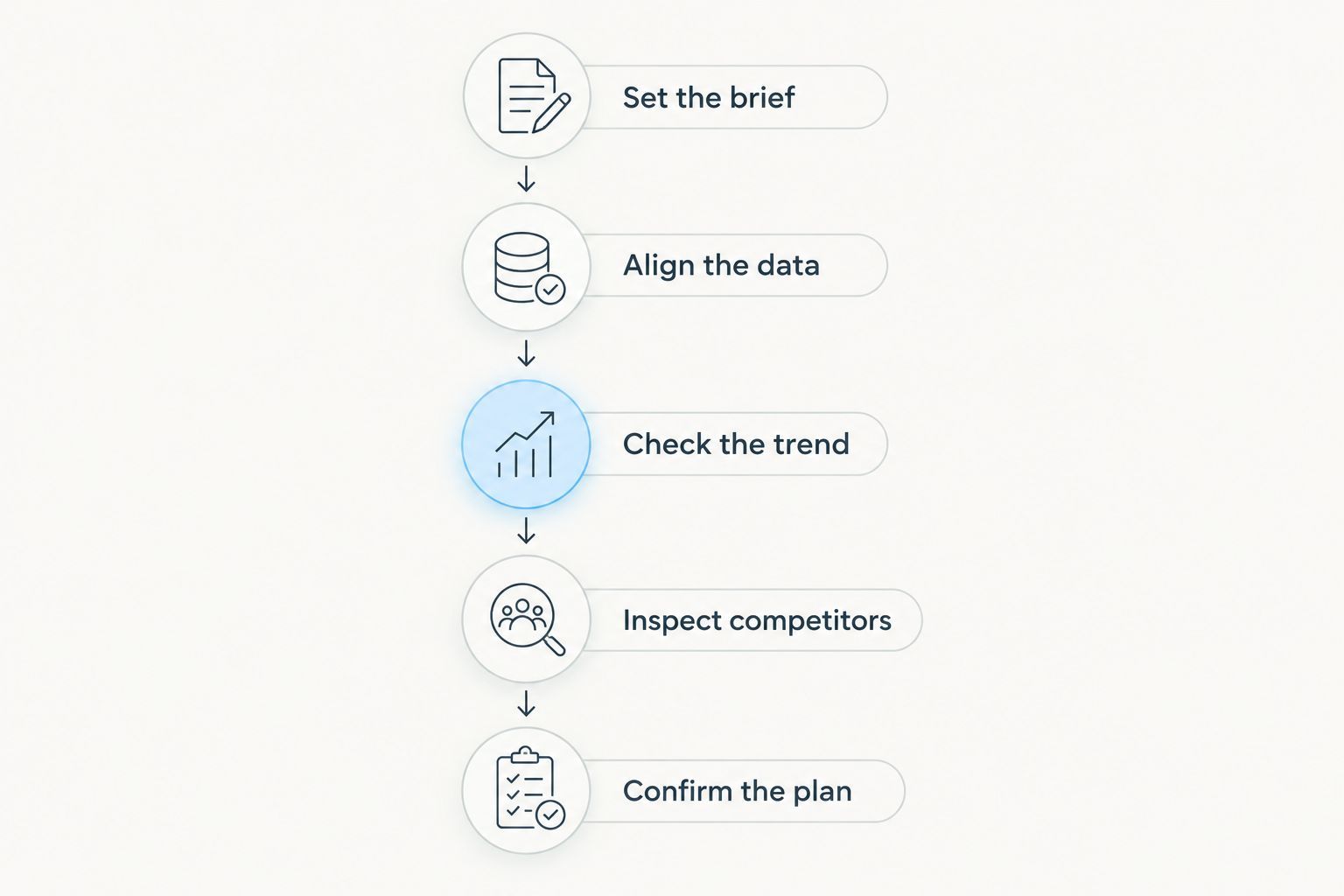
The worksheet should leave you with a reason to investigate each suburb, not just an ordered list. A suburb that survives the comparison still needs property-specific due diligence.
Read the percentage correctly
A vacancy percentage relates the source's vacant-property count to its rental stock denominator. On a percentage scale, 0% means none of that defined stock is counted as vacant; 100% means all of it is counted as vacant. Neither boundary describes Adelaide's current rate here.
Check the publisher's methodology before comparing sources. Definitions of vacancy, stock and reporting geography determine what the calculation represents.
Do not convert a suburb vacancy percentage into an individual property's expected vacant weeks. Those are different measures, and the area-wide percentage does not establish your property's future occupancy.
Which comparison should you choose?
Start with matched property-type data, check the monthly trend, then audit competing rentals before choosing a property. That sequence keeps Adelaide rental vacancy rates connected to the investment you actually intend to make.
Use wider-catchment evidence when the local result needs context. Use a management assessment when you need to move from market research to preparation and leasing decisions.
In 2026, choose the suburb with a defensible property-level rental case, not merely the smallest percentage in a table. Axiomrealty's investment advisory and property management services cover the research and management sides of that decision.
FAQ
What’s the best way to compare Adelaide rental vacancy rates?
Compare the same property type, reporting month, geographic level and vacancy definition. Then review the monthly trend and comparable advertised rentals before applying the suburb result to a particular property.
Which Adelaide suburb has the lowest rental vacancy rate in 2026?
A lowest-vacancy ranking must specify the source, reporting month and geographic boundaries. Check those details before accepting a suburb league table, and compare dwelling types separately where the source permits.
Does a low vacancy rate make a suburb a good investment?
A low vacancy rate is not sufficient evidence that a suburb is a good investment. Assess the specific property’s condition, competing rentals, operating requirements and suitability for the intended tenant.
Is a suburb vacancy rate the same as a postcode vacancy rate?
No, suburb and postcode vacancy rates describe different geographic boundaries. Keep them separate unless the source explicitly establishes that the areas are equivalent.
How much rental history should I review?
Use 12 months of observations as a practical starting window for a vacancy comparison. Keep the source and methodology consistent, and extend the history when you need additional context.
Does a rental listing disappearing mean the property leased?
No, a removed rental advertisement does not by itself prove that the property leased. Check whether it was leased, withdrawn or relisted before treating removal as an outcome.
Can Axiomrealty help with an Adelaide investment property?
Axiomrealty offers investment advisory and property management services to South Australian property investors. Ask which services address your purchase assessment and ongoing management requirements.
One last thing
Keep the original counts whenever the source supplies them. Two percentages can look equally persuasive while representing different amounts of rental stock; the denominator helps you judge how much context each result carries.
Before settling your 2026 shortlist, check that every figure answers the same question. Consistency makes a vacancy comparison useful. Extra decimal places do not.