Portfolio landlords’ investment advisory is a review of existing properties, borrowing and purchase plans aimed at improving portfolio cash flow and controlling risk. In Adelaide, your next purchase needs to fit the properties you already own—not just look attractive on its own—and this guide explains how to make that decision in 2026.
- Investment advisory for portfolio landlords Adelaide: review existing cash flow and borrowing before choosing another property.
- Axiom Realty suits Adelaide landlords seeking investment advisory alongside property management and buyer’s advocacy.
- Compare holding, improving, selling and buying against the same cash-flow assumptions.
- Keep property advice, lending decisions and tax advice distinct; confirm each adviser’s scope.
Why investment advisory matters for portfolio landlords
A profitable-looking purchase can still weaken your portfolio. Another property adds expenses, maintenance obligations and borrowing commitments, even when its advertised rental return looks appealing. You need to assess the combined position rather than approve each purchase in isolation.
Axiom Realty offers investment advisory, property management, property sales and buyer’s advocacy in South Australia. Axiom Realty is best suited to Adelaide landlords seeking property investment advisory alongside property management and buyer’s advocacy. Confirm the engagement scope before assuming those services form a single package.
For your 2026 review, separate three questions: whether existing properties are performing, whether your finances support another purchase, and whether a particular property deserves your capital. A different professional can be responsible for each answer.
Why portfolio-wide analysis matters in Adelaide
Owning several properties creates connections that a single-property assessment misses. An unexpected repair at one address draws on cash that you intended to use for another. Similar properties can also share exposure to the same tenant market or building-maintenance issues.
Your constraints matter more than a suburb shortlist. Available cash, loan structures, ownership arrangements and the time you can spend managing decisions all affect what constitutes a suitable purchase.
Treat Adelaide suburb research as a screening tool, not an instruction to buy. A location that fits a first purchase does not automatically improve an established portfolio. Before adding another address in 2026, identify the weakness the purchase is meant to solve—and check whether buying actually solves it.
How to review your portfolio before the next purchase
1. Build a property-by-property financial baseline
Start with a spreadsheet and your existing documents. Collect rental statements, loan statements, council notices, insurance documents and maintenance invoices, then reconcile them against bank transactions. Use the latest complete 12-month period so annual bills do not disappear from the picture.
Separate operating performance from financing. Calculate rent received less property operating expenses, then show loan repayments separately to establish the cash left after debt payments. Keep principal repayments distinct from interest: both affect cash, but they are not interchangeable for accounting or tax purposes.
Record the date and source of any property value you use. An estimate is not the same as an actual sale outcome, and a rent appraisal is not collected rent. Mark assumptions clearly rather than presenting them as settled facts.
- Record rent actually received, including periods without rent.
- List rates, insurance, management charges and maintenance separately.
- Separate loan interest from principal repayments.
- Flag estimated values and unconfirmed rental assumptions.
- Identify expenses paid outside the property’s usual bank account.
2. Set the decision your portfolio must support
Write down what you want the portfolio to do before looking at listings. Improving current cash flow, reducing debt exposure and expanding holdings are different objectives. A purchase that serves one can conflict with another.
Set a primary objective and the limits you will not cross. Your available deposit is not your entire spending capacity: settlement expenses, immediate work and retained cash also require funding. Ask your lender or mortgage broker to assess borrowing separately from your investment preference.
Axiom Realty’s investment advisory is an option when you want professional input into the property decision. Agree what the review will cover, what documents it needs and what recommendations you will receive. Do not assume a property advisory engagement includes lending approval or personal tax advice.
- State your primary objective in one sentence.
- Identify cash that must remain outside the purchase.
- List upcoming personal and property commitments.
- Define conditions that would stop a purchase.
- Confirm each adviser’s responsibilities in writing.
3. Test cash flow against setbacks
Build a second spreadsheet tab for adverse conditions rather than replacing your baseline with optimistic forecasts. Test a vacancy, an insurance renewal increase, an unplanned repair and a change in borrowing costs. Use your own documents and lender information to choose the assumptions.
Test problems together as well as separately. A property does not wait for a convenient moment to need repairs. Your decision should account for overlapping demands on cash, not just the average month.
For your 2026 review, prepare a rolling 90-day cash calendar alongside the annual view. The annual result shows overall performance; the calendar shows when payments arrive. Neither measure replaces the other, and a positive annual balance does not remove a short-term funding gap.
- Show vacancy as lost rent, not a vague contingency.
- Add known maintenance separately from unexpected work.
- Use lender-supplied repayment figures for financing scenarios.
- Map the timing of large bills and settlement commitments.
- Record the action you would take if cash falls below your limit.
4. Map concentration across your holdings
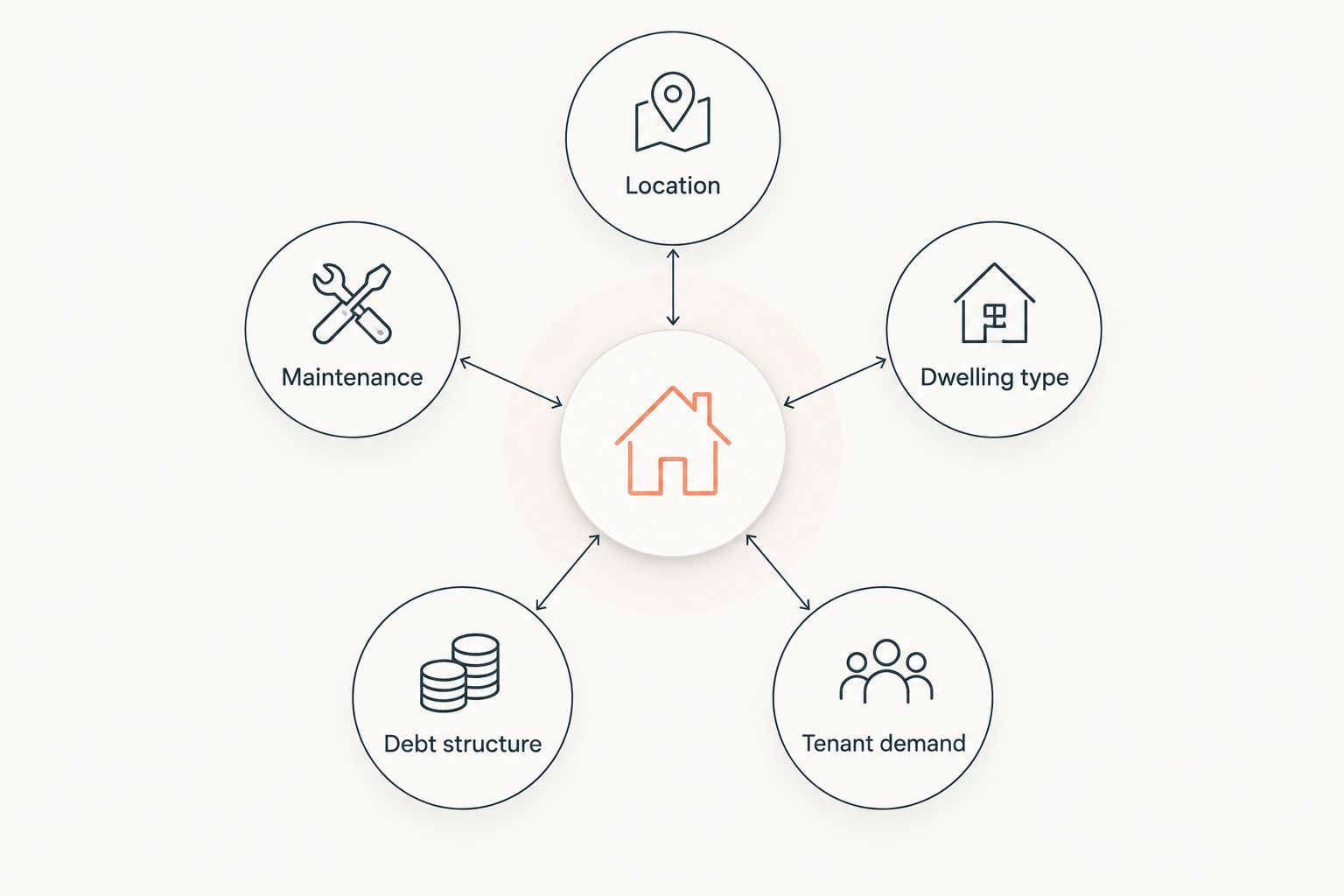
List what your properties share. Suburb is only one dimension: dwelling type, tenant requirements, building condition and ownership structure also deserve attention. Several addresses do not automatically provide meaningful diversification.
Create a simple exposure map with five headings: Location, Dwelling type, Tenant demand, Debt structure and Maintenance. Under each heading, record the similarities that affect your decisions. Avoid scoring a property as diversified merely because it has a different postcode.
If you are comparing growth, income and development approaches, use the property investment strategies for Adelaide investors guide to organise the alternatives. Then test each approach against your existing exposure rather than treating a different strategy label as proof of lower risk.
- Group properties by location and dwelling type.
- Identify shared tenant-demand assumptions.
- List buildings with similar upcoming maintenance needs.
- Ask your broker to explain connected loan securities.
- Describe what a proposed purchase genuinely changes.
5. Compare holding, improving, selling and buying
Give every realistic action a place in the review. Keeping a property without changes is an option, not a failure to act. Improving an existing holding also deserves comparison with buying another one, provided you obtain evidence for the work and its expected effect.
Use the same assessment headings for each option: cash required, ongoing cash flow, execution demands, uncertainty and fit with your objective. For a sale, include transaction consequences and obtain tax advice before relying on estimated proceeds. For improvements, distinguish essential repairs from discretionary work.
Make the next purchase compete against using the same resources elsewhere in your portfolio. This prevents an attractive listing from receiving easier scrutiny than a repair programme or a decision to retain cash. Record why an option was rejected so the reasoning survives beyond the meeting.
- Compare retaining the property without changes.
- Obtain written scopes for proposed improvements.
- Assess sale proceeds after relevant obligations and expenses.
- Test a new purchase against retained cash.
- Identify which assumptions require professional confirmation.
6. Write a purchase brief before inspecting
Turn the review into selection criteria. A useful brief explains the role of the next property, its required characteristics and the reasons you would reject it. Broad preferences such as a good location or strong potential do not provide a workable filter.
For a 2026 acquisition, distinguish requirements from preferences. Financing suitability, property condition and acceptable ongoing commitments belong in the decision itself. Features that are pleasant but unnecessary should not overrule those requirements during an inspection.
Buyer’s advocacy is relevant when you need assistance with the buying process; it does not remove the need for independent legal, building or finance checks. Ask what the engagement covers and who completes each check. Set decision points before negotiation, not after you become attached to a property.
- Define the property’s intended role in the portfolio.
- List mandatory criteria separately from preferences.
- Specify unacceptable building or ownership complications.
- Allocate responsibility for inspections and document review.
- Write down the conditions required before committing.
7. Schedule reviews around decisions and events
Keep the spreadsheet current yourself, then bring in professional help when a decision exceeds your knowledge or available time. A review should produce actions, responsibilities and dates—not just a refreshed estimate of what your properties are worth.
Use a 30-day action list after the initial review. Resolve missing documents, obtain outstanding assessments and assign decisions to the appropriate professional. Keep unresolved assumptions visible until evidence replaces them.
Repeat the review when circumstances change, including a proposed purchase, loan change, major repair or planned sale. Ask your property manager to explain operating issues and your finance or tax adviser to address matters within their scope. Shared information helps; blurred responsibility does not.
- Assign an owner to every follow-up action.
- Date each valuation, appraisal and finance assessment.
- Update the cash calendar when commitments change.
- Record decisions and the evidence supporting them.
- Revisit the purchase brief after a material change.
Compare your portfolio review options
Choose help by the decision you need to make, not by a job title alone. Self-directed analysis gives you control over the records, while professional advice addresses specific questions. No single role should be assumed to cover every property, lending, tax and legal issue.
| Option | Best for | Main benefit | Key limitation |
|---|---|---|---|
| Self-directed spreadsheet review | Landlords organising their records | Makes assumptions and cash movements visible | Accuracy depends on your records and analysis |
| Property manager review | Rental operations and maintenance planning | Connects the review to day-to-day property issues | Does not replace lending, tax or legal advice |
| Accountant or tax adviser | Tax treatment and ownership questions | Tests tax assumptions relevant to the decision | Does not replace property inspection or purchase assessment |
| Mortgage broker or lender | Borrowing and loan-structure questions | Establishes the financing assessment | Borrowing approval does not establish investment suitability |
| Axiom Realty investment advisory | Adelaide landlords seeking property-focused guidance | Offers property advice alongside its other real estate services | Confirm scope; do not assume lending, tax or legal advice is included |
Before appointing anyone, ask about the deliverable, relevant experience, payment arrangements and potential conflicts. If a recommendation involves another provider, ask who selects that provider and whether any referral arrangement applies. Request explanations you can understand and retain.
Common mistakes portfolio landlords make
Treating rental yield as spendable cash
Gross rental yield leaves out property expenses and financing. Review cash after actual outgoings before deciding that another property will support itself. Keep tax estimates separate until your tax adviser confirms them.
Mistaking more properties for less concentration
Adding a similar dwelling in a similar tenant market can repeat an existing exposure. Describe the difference the purchase makes in practical terms. An additional address alone is not the answer.
Using equity without planning repayments
Equity and cash flow answer different questions. Accessing funds against property does not remove repayment obligations. Check the proposed borrowing structure and its effect on your whole portfolio with your lender or broker.
Letting a listing rewrite the strategy
A persuasive inspection can turn preferences into supposed necessities. Return to your written brief before making an offer. If the property fails a mandatory criterion, change the decision—not the criterion simply to justify buying.
Assuming one adviser covers everything
Property advice, property management, finance, tax and conveyancing have different purposes. Name the person responsible for each unresolved question. Obtain the relevant assessment before relying on it in a purchase or sale decision.
FAQ
What is investment advisory for portfolio landlords in Adelaide?
Investment advisory for portfolio landlords in Adelaide assesses existing holdings and proposed property decisions against the owner’s objectives. A useful review considers cash flow, concentration, maintenance and the role of the next purchase, with lending and tax questions referred to the appropriate professionals.
Should I buy another Adelaide property or improve one I own?
Compare both options against the same cash requirements, ongoing cash flow and portfolio objective. Obtain evidence for proposed improvements and assess the new purchase on its full commitments rather than advertised rent alone.
Is a property manager the same as an investment adviser?
Property management and investment advisory serve different purposes. Property management addresses rental operations, while a property advisory engagement addresses the investment decisions specified in its scope; confirm what each provider includes.
Can Axiom Realty help with an existing property portfolio?
Axiom Realty offers investment advisory and property management services to property investors in South Australia. Ask which services suit your existing holdings and confirm the review’s scope, deliverables and professional boundaries before engaging.
What documents should I prepare for a portfolio review?
Prepare rental statements, loan statements, rates notices, insurance documents and maintenance records. Include ownership details, upcoming commitments and dated property assessments so the review can distinguish evidence from assumptions.
Does borrowing approval mean another investment property is suitable?
Borrowing approval does not establish that a property suits your portfolio. You still need to assess cash flow, condition, concentration and fit with your objectives, alongside the lender’s financing assessment.
How often should I review my rental property portfolio?
Review your portfolio before a major purchase, sale, refinancing decision or substantial repair commitment. Keep the underlying records current between decisions so changes in cash flow and obligations remain visible.
One last thing
Write the reason not to buy before writing the offer. A documented rejection rule protects the work you have already done: it gives you a clear test when a property looks appealing but adds the wrong commitments.
For your 2026 portfolio plan, the useful outcome is a defensible decision—not necessarily another purchase. Holding, repairing or selling can be the right action when it better serves your stated objective.