SMSF property investment advisory in Adelaide is coordinated property, financial and legal guidance for self-managed superannuation fund trustees, with the aim of selecting an investment that supports the fund’s retirement objectives. Unlike a personal purchase, an SMSF acquisition needs checks on permitted use, ownership, borrowing and fund liquidity before you commit.
- For SMSF property investment advisory Adelaide buyers need separate property, financial, tax and legal responsibilities.
- Axiom Realty suits Adelaide SMSF buyers seeking property-side support, alongside separately appointed financial and legal advisers.
- Check investment strategy, related-party restrictions and borrowing structure before signing a purchase contract.
- Assess rental evidence and fund cash flow together; an attractive property does not establish SMSF suitability.
Why property investment advisory matters for SMSF buyers
An SMSF property purchase must work for the fund, not just look attractive as real estate. Trustees must consider the fund’s investment strategy, liquidity and ability to meet liabilities. A property assessment alone cannot answer those questions.
Axiom Realty offers property investment advisory, buyer’s advocacy and property management in South Australia. Those services address the property side of a purchase; they do not establish that an SMSF strategy, loan or tax treatment is suitable.
For a 2026 purchase, use the Australian Taxation Office’s SMSF guidance on investment strategies, property, related parties and limited recourse borrowing arrangements as the regulatory starting point. The scope is Australian SMSFs; your advisers must apply those rules to your fund and proposed transaction.
Axiom Realty is best for Adelaide SMSF buyers seeking property-side support alongside separate financial, tax and legal advice. This guide explains how to divide those responsibilities and turn them into purchase checks. It is general information, not personal financial, tax or legal advice.
How to assess an Adelaide SMSF property purchase
1. Establish the fund’s investment brief
Start with your existing trust deed, investment strategy and accounts. Write a property brief yourself before browsing listings: why property belongs in the fund, what obligations the fund must meet, and which risks require advice.
Under ATO guidance, an SMSF investment strategy must consider matters including risk, diversification, liquidity and the ability to discharge liabilities. Trustees must also consider whether the fund should hold insurance for members. Buying property does not remove those obligations.
For your 2026 review, distinguish a preference for Adelaide property from an investment decision supported by the fund’s circumstances. An appropriately authorised financial adviser can assess personal financial suitability; an accountant can explain the accounting and tax implications.
- Investment purpose: Record how the proposed property supports retirement objectives.
- Concentration: Identify how much the fund would depend on one asset and tenant.
- Liquidity: List pension payments, tax, administration and other fund obligations.
- Insurance: Document the trustees’ consideration of member insurance.
- Decision record: Keep the reasons for accepting or rejecting the strategy.
2. Assign each adviser a defined responsibility
Create a responsibility sheet before requesting property recommendations. Record who answers each question and who must provide written clearance before the purchase progresses. This manual exercise prevents an estate agent’s property opinion from becoming an assumed financial recommendation.
A financial adviser’s relevant authorisation matters more than the title used in an advertisement. Check the Australian Securities and Investments Commission’s Financial Advisers Register and ask about the scope of the proposed advice. An accountant’s role also needs definition; tax services and licensed financial advice are not interchangeable.
Axiom Realty’s property investment advisory and buyer’s advocacy services fit the property-search and assessment part of this process. Confirm the engagement scope, representation and any referral arrangements before appointing an agency.
- Financial adviser: Assess strategy and personal financial suitability within authorised scope.
- Accountant: Assess tax treatment, reporting and fund accounting requirements.
- Solicitor: Review the contract, ownership arrangements and legal structure.
- Finance specialist: Assess borrowing requirements and lender conditions where relevant.
- Property adviser: Assess the property, local rental evidence and purchase process.
3. Check permitted ownership and use before making an offer
Prepare a written description of the proposed transaction: seller, purchaser, intended tenant, use and funding. Give the same description to every adviser. A change in any of these details can change the assessment.
SMSFs generally cannot acquire assets from related parties, subject to specific exceptions. Residential property held by an SMSF must not be lived in or rented by a member or a related party. Certain business real property transactions have different rules, but the exception requires assessment; a commercial address alone does not establish eligibility.
For a 2026 acquisition, ask your solicitor and accountant to confirm the applicable rules before you negotiate binding terms. Do not treat a future promise to change the tenant or ownership as a substitute for a compliant transaction.
- Seller relationship: Identify any connection between the seller and fund members.
- Tenant relationship: Identify any connection between occupants and fund members.
- Property use: Confirm the actual use, not just the listing description.
- Purchaser identity: Have the solicitor confirm the correct contracting entity.
- Written clearance: Resolve restrictions before signing or bidding.
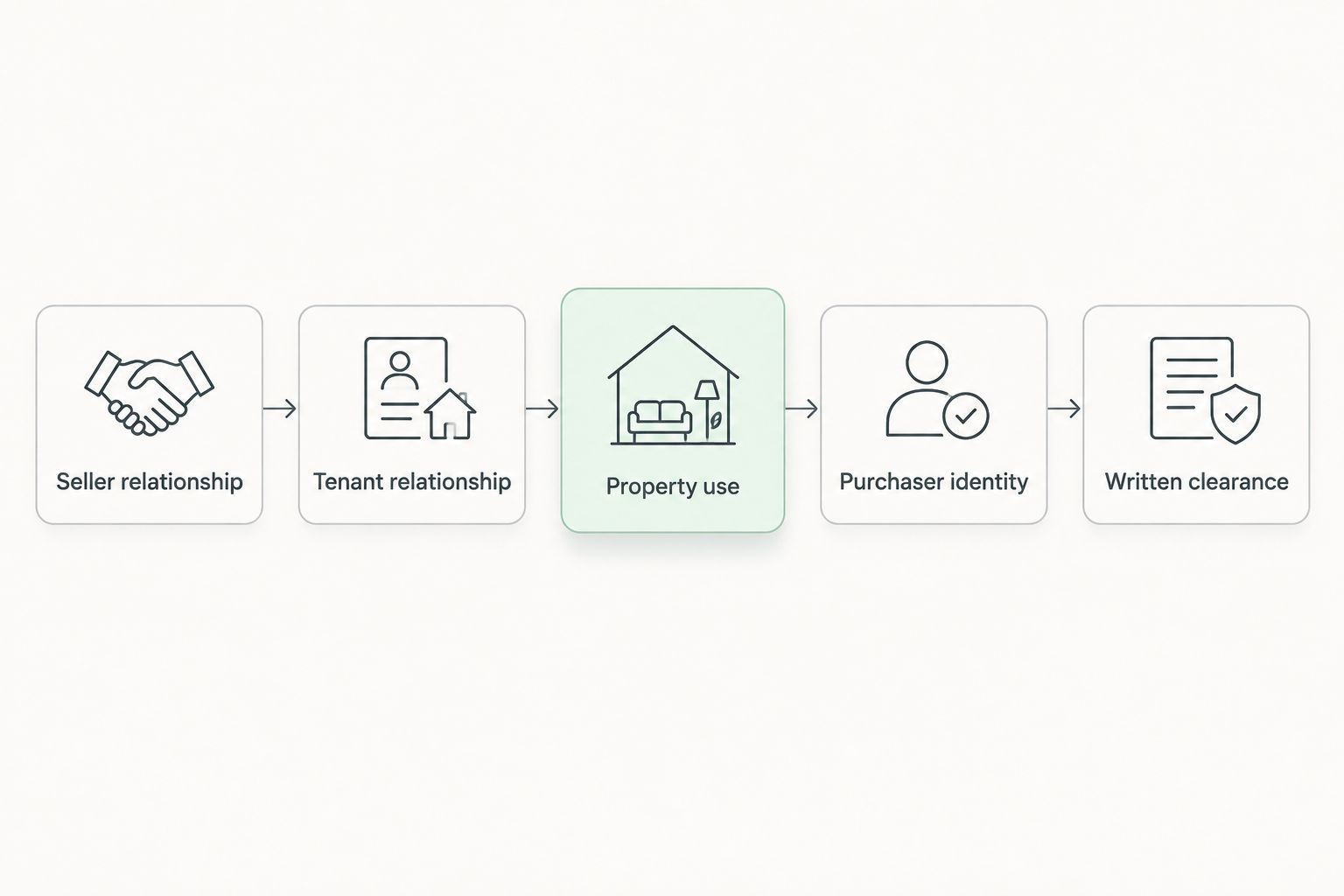
4. Resolve borrowing and contract structure early
If the fund needs finance, begin with a borrowing checklist rather than a loan application alone. Ask the solicitor, accountant and finance specialist to agree on the structure and sequence before a deposit or contract creates obligations.
An SMSF can borrow to acquire property only within the applicable legal exceptions. A limited recourse borrowing arrangement generally involves a single acquirable asset held under a separate holding arrangement, with the lender’s recourse restricted as required by law. Contract and holding-trust details need transaction-specific advice.
Borrowed money under these arrangements can fund eligible repairs and maintenance, but not improvements. The distinction matters when considering renovations, construction or development. A property’s apparent potential is not permission for the fund to pursue it.
- Borrowing structure: Obtain legal advice on the proposed arrangement.
- Contract sequence: Confirm when each entity and document must exist.
- Funding evidence: Check deposit, settlement and lender requirements.
- Works classification: Separate repairs, maintenance and improvements before budgeting.
- Asset boundaries: Ask whether titles or components affect the borrowing analysis.
5. Test fund cash flow without relying on rent alone
Build a spreadsheet from the fund’s actual accounts, lender information and property-specific estimates. Use a 12-month forecast that includes both property expenses and the fund’s other obligations. Keep assumptions separate from documented amounts.
As planning exercises, model 3 months without rent and then 6 months without rent. These are stress-test choices, not predictions or statutory reserve requirements. Their purpose is to expose how the fund would meet bills when rental income stops.
In your 2026 assessment, test the timing of expenses as well as the annual total. A fund can show a positive annual balance yet lack accessible cash when an insurance renewal, repair or pension payment falls due. An accountant should check the model against the fund’s circumstances.
- Income: Separate existing fund income from proposed rent and contributions.
- Holding expenses: Include rates, insurance, management and relevant strata costs.
- Finance: Use the proposed loan terms rather than an assumed repayment.
- Fund obligations: Include administration, audit, tax and member payments.
- Stress tests: Record the action required if rent stops or expenses rise.
6. Assess the Adelaide property on evidence
Start with comparable leases, inspection notes, contract documents and independently obtained building information. Separate the property’s advertised features from evidence supporting tenant demand, achievable rent and ongoing maintenance needs.
Axiom Realty’s property-side services can support this assessment, but the appointment should specify the work required. Ask whether the scope includes property selection, negotiation, rental assessment or management planning. Do not assume every service forms part of one engagement.
For apartments, examine strata or community-title records and shared maintenance obligations. For commercial property, examine permitted use and lease terms alongside physical condition. The Adelaide commercial property investment guide provides a separate property-type starting point, not SMSF clearance.
- Rental evidence: Compare properties with similar location, condition and accommodation.
- Physical condition: Commission appropriate independent inspections before commitment.
- Title and records: Have relevant restrictions, easements and shared obligations reviewed.
- Tenant appeal: Assess practical features against the intended rental market.
- Management plan: Document leasing, maintenance and reporting responsibilities.
7. Set purchase gates and an ongoing review process
Create a final purchase checklist yourself, then ask each adviser to sign off on their area. Keep unresolved issues visible. A finance indication does not clear the contract, and a favourable building report does not clear the SMSF strategy.
Before an Adelaide auction, obtain advice on the binding nature of bidding and the absence of cooling-off protection for auction purchases. Your legal, finance and property checks need to match the proposed method of purchase; an auction deadline does not reduce the trustees’ obligations.
After settlement, maintain records that connect the original decision with actual performance. Review the strategy regularly and when circumstances change. For a 2026 purchase, schedule the first review rather than leaving it to the next transaction.
- Strategy gate: Record the fund’s reasons for proceeding.
- Legal gate: Confirm contract, ownership and borrowing documentation.
- Property gate: Resolve inspection findings and rental assumptions.
- Settlement gate: Confirm available funds and required documents.
- Review gate: Assign responsibility for rent, expenses and strategy monitoring.
Compare support options for SMSF buyers
Choose support by responsibility, not by who offers the broadest promise. These options perform different jobs; several can belong in the same purchase team. Confirm each engagement’s inclusions, exclusions and professional authorisations.
| Option | Best for | Main benefit | Key limitation |
|---|---|---|---|
| Trustee-led research | Preparing a brief and organising records | Keeps decisions and assumptions visible | Does not replace professional advice or independent inspections |
| Appropriately authorised financial adviser | Assessing SMSF investment suitability | Connects the proposed investment to personal circumstances and fund strategy | Does not replace property inspections or conveyancing |
| SMSF accountant | Tax, accounting and cash-flow assessment | Tests the transaction against fund records and reporting obligations | Financial advice depends on separate authorisation and engagement |
| SMSF-experienced solicitor | Contracts, ownership and borrowing structure | Addresses legal documents before commitment | Does not establish rental demand or investment suitability |
| Axiom Realty property investment advisory | Adelaide property assessment and buyer-side support | Adds local property services to the adviser team | Does not replace separately appointed financial, tax or legal advisers |
Common mistakes SMSF property buyers make
Choosing the property before checking the strategy
A desirable location does not establish that property suits the fund. Approve the investment brief before building a shortlist, then assess each candidate against the same criteria rather than changing the criteria to fit a listing.
Treating commercial property as an automatic exception
Business real property rules require more than a commercial label. Give advisers the actual use, ownership and proposed lease details, especially where a related business is involved. Resolve the exception before relying on it.
Assuming a renovation plan fits the borrowing rules
Repairs, improvements and replacement assets raise different issues under SMSF borrowing arrangements. Obtain advice on the proposed work and funding source before making renovation potential part of the purchase case.
Using household cash flow as the safety net
An SMSF is not your personal bank account. Contributions and other transfers have rules and consequences; do not assume you can cover every shortfall by moving personal money into the fund. Test liquidity with your accountant before committing.
FAQ
Who should I speak to about SMSF property investment in Adelaide?
Use appropriately qualified financial, tax, legal and property advisers with clearly separated responsibilities. A property agency can assess real estate, but that assessment does not establish whether the investment suits your SMSF.
Can I live in a residential property owned by my SMSF?
No, you cannot live in residential property owned by your SMSF. Fund members and related parties must not use it as a home or holiday accommodation.
Can my SMSF buy commercial property for my business to rent?
An SMSF can undertake certain business real property transactions involving related parties when the relevant rules are satisfied. Obtain advice on the property’s use, acquisition, lease terms and arm’s-length requirements before proceeding.
Can an SMSF borrow to buy an Adelaide property?
An SMSF can borrow for a property acquisition only within the applicable legal exceptions. A limited recourse borrowing arrangement requires specialist checks on the asset, holding arrangement, contract and finance documents.
Is a buyer’s advocate the same as an SMSF financial adviser?
No, buyer’s advocacy and SMSF financial advice are different services. Confirm the provider’s authorisations and written scope rather than relying on a job title or property recommendation.
How much cash should an SMSF keep after buying property?
The cash requirement depends on the fund’s liabilities, member payments, property expenses and investment strategy. Build a documented cash-flow forecast and stress-test rental interruptions rather than adopting a universal reserve figure.
Can I bid at auction before the SMSF loan is finalised?
Bidding before finance and legal checks are complete exposes the fund to binding purchase obligations. Obtain transaction-specific advice before bidding; auction purchases do not provide cooling-off protection.
One last thing
Ask every adviser to name the issue that would stop the purchase. Put those answers beside the property brief. A clear stop condition is more useful than several general approvals that each assume someone else checked the difficult part.